Reviews of In the Supplementary Garden by Diana Bridge (Cold Hub Press, 2016), Fish Stories by Mary Cresswell (Canterbury University Press, 2015), Anatomize by Natasha Dennerstein (Norfolk Press, 2015), for Landfall Review Online
WORD: Work / Sex, with Kate Holden, Leigh Hopkinson, Jodi Sh. Doff and Julie Hill

Review of Work / Sex, with Kate Holden, Leigh Hopkinson, Jodi Sh. Doff and Julie Hill, from WORD Christchurch, 2016
If Ivan E. Coyote did one of the best things a literary festival can do – broke my heart and then put it back together again made better – this session did another: forced me to examine my own unconscious bias and realise I was wrong.
WORD: Ask a Mortician: Caitlin Doughty interviewed by Marcus Elliott

Review of Marcus Elliott's interview with mortician and author Caitlin Doughty at WORD Christchurch, 2016
Death is an odd thing to be chipper about. LA-based mortician, ‘death positive’ advocate and YouTube star Caitlin Doughty is definitely chipper, though: she has that extreme chirpiness that I’m going to assume is compulsory for anyone living in Los Angeles.
WORD: Speaking Out – Tara Moss interviewed by Joanna Norris

Review of Joanna Norris' interview with Tara Moss at WORD Christchurch 2016
At the 2050 session yesterday about climate chaos, panellists spoke about the danger of going from denial to despair. I was thinking about that a lot as I watched author and feminist activist Tara Moss give a presentation on sexism in the media, politics and society.
WORD: Busted – feminism and Pop Culture, with Debbie Stoller and Charlotte Graham

WORD: Reading Favourites, with David Hill, Jolisa Gracewood and Paula Morris
Orville: Ghost of Honour
As is only right and fitting, Orville has been invited to be the Ghost of Honour at LexiCon, NZ’s 38th national science fiction and fantasy convention. Here is the text of the short bio I have supplied for the con book:
“Orville: rat, film star, legend. In many ways, Orville’s is the classic rags-to-riches story. He survived a difficult kittenhood in the foster care system, eventually being adopted from the New Zealand Rat Rescue by a Wellington couple. He quickly adapted to a life of leisure and treats, but there was something missing.
And then, in early 2012, the call came: the call to greatness. Peter Jackson needed rats for The Hobbit films, and Orville was just the rat for the job. He never looked back. Orville took to the glamorous film-star lifestyle as though born to it, hobnobbing with agents, makeup artists and actors with grace and poise. He was pleased to receive fan mail from John Rhys-Davies, and condescended to appear in a short film documenting his fabulous career. He died in late 2013, the bright flame of his talent extinguished by old age.”

Fan mail for Orville the Movie-Star Rat from John Rhys-Davies. CC BY
Book review: Smoke by Dan Vyleta
This review was commissioned by BooksellersNZ and originally published on their blog The Reader in June 2016
I chose to read and review this book because of its intriguing premise - what if sin were visible? What if, every time you did (or even thought) something ‘bad’, your body emitted smoke?
Dan Vyleta’s new YA novel imagines a Victorian England where smoke has become not just the visual manifestation of sin but a tool of class oppression: upper-class people never smoke, working-class people smoke all the time. Rich people’s white clothing remains white; poor people’s clothing is covered in soot. (The middle classes don’t really appear, apart from the odd mention: “Burghers may smoke, once in a while. One does not expect better of them.”)
I found the premise of human smoke to be utterly fascinating, and a good thing too, because plot- and character-wise Smoke is almost completely run-of-the-mill. Keen YA readers will find all their favourite tropes: young people who have to save the world, a teenage girl torn between two male love interests (one of whom is kind and openly in love with her, and the other of whom is a sexy bad boy whose attentions are more ambiguous), adults who turn out to be untrustworthy and/or dangerous, etc.
Smoke opens in a vicious upper-class boarding school near Oxford where the children of the rich are sent to have the smoke beaten out of them. Our heroes are two schoolboys: Thomas (brooding; dark past; possibly a ‘chosen one’) and Charlie (helpful; kind; faithful companion). They are tortured by an older boy, the prefect Julius (cruel; entitled; arrogant). Over the Christmas hols they’re sent to stay with Thomas’s uncle, Baron Naylor, where they meet the baron’s daughter (the novel’s third protagonist) Livia (pretty, and thus a romantic goal for both Thomas and Charlie; intelligent; self-disciplined to the point of aggravating piousness). Lady Naylor, a scientist and revolutionary, reveals that All Is Not As It Seems, that the aristocrats appear smokeless not because they’re morally superior but because they’ve found a way to game the system, and that the conspiracy to maintain the oppressive status quo goes All The Way To The Top. But can she be trusted? Our heroes must set off on a Quest to Discover the Truth! Etc.
Despite its occasional clunkiness, Smoke is an enjoyable read, with enough mystery and adventure to keep the reader turning pages. Although Vyleta seems to be more concerned with investigating the mechanics and meaning of human smoke than in the readability of his novel, this didn’t bother me, because I too found the whole concept intriguing.
Various adult characters serve as mouthpieces for different ideologies of smoke. The religious interpretation states that smoke is the manifestation of sin, and must be punished. The Enlightenment-inspired philosophers attempt to study smoke in a rational manner: “Every transgression leaves behind its own type of Soot and those versed in such matters can determine the severity of your crime just by studying the stain’s density and grit.” Maybe smoke is the symptom of a disease that science can cure? The Marxist interpretation says that smoke is a tool of class oppression: “Smoking ain’t a sin. It’s a weapon. Toffs use it to keep us down.” The humanist-socialist interpretation says that smoke is a natural expression of passion: “It’s the animal part of us that will not serve.”
At its best, Smoke is a fascinating alternative history that fully explores the central question, what if human bodies smoked? At its worst, it’s a trope-ridden YA novel that doesn’t quite manage to lift itself up from under the layers of plot strands and furious philosophising. An enjoyable light read.
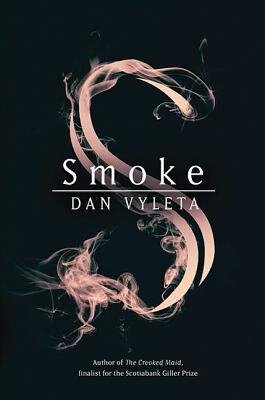
Book review: Smoke, by Dan Vyleta

The Unravelling: Emma Sky at #AWF16

Strangely Human: Michel Faber at #AWF16

For me, literary festivals are a massive intellectual high. I like to pour myself into them and demand stimulation. They fizz me up; I start bouncing around, talking very quickly, and gesticulating as energetically as I can (given that I am usually holding a bag, a laptop, a coffee and several books). I arrived at the Strangely Human session in a state of high excitement, keen to hear Paula Morris interview Michel Faber. And then something happened.
The Diversity Debate: Victor Rodger, Marlon James & Stephanie Johnson at #AWF16

An Evening with Gloria Steinem at #AWF16

Elizabeth's guide to surviving literary festivals
STEP ONE
Literary festival programme is released. Get very excited. Go through programme highlighting events I want to attend. Realise is nearly entire programme. Try and shortlist.
STEP TWO
Realise some shortlisted events clash. Gnash teeth. Attempt to perform impossible calculus of scheduling: desire to see famous people, desire to support book industry colleagues, desire to learn something new, desire to follow a friend’s recommendation, desire to hear an author speak who lives in a country I’ve never been to, desire to lie at the feet of an author whose work I love.
The Kiwi-Aussie literary divide

The place of books on Radio NZ National
As part of The Read’s ongoing investigation into the place and value of book reviewing in Aotearoa (where this article originally appeared, on 23 April 2015), I wanted to explore the ways in which Radio New Zealand National contributes to and supports our book culture. As with print review media, discussion of books on radio can take the form of a feature, an author interview, or a review. To this list, radio adds a more performative element – books read aloud. I spoke to producers and presenters at Radio NZ, as well as booksellers around the country.
Bletchley Park, Gran, and Mac
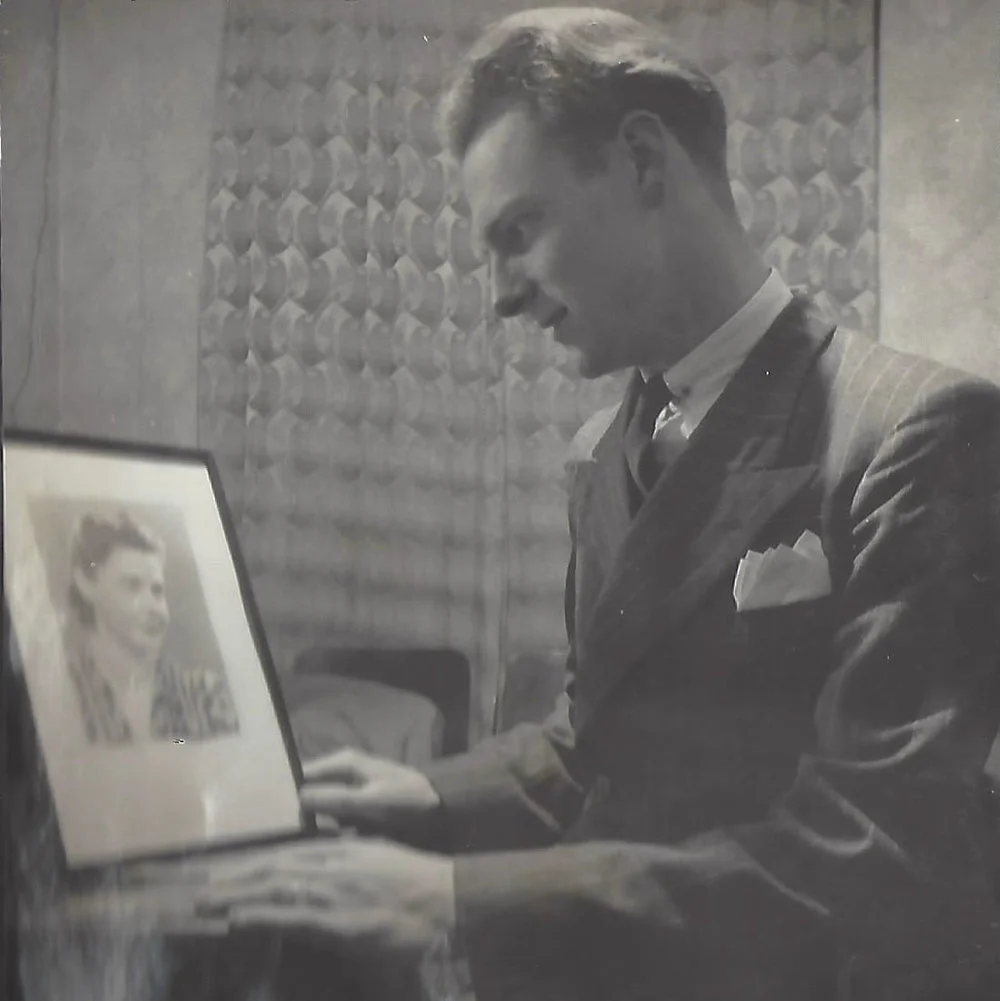
Bletchley Park – and the stories of the women who worked there during World War Two – is of keen personal interest to me. My Gran, Irene, was one of those women. She took the Official Secrets Act very seriously, and never told me much about it. So I jumped at the chance to read Tessa Dunlop’s book The Bletchley Girls and learn more.
Characters from the past, Elizabeth Heritage
The Margaret Mahy Lecture, by Elizabeth Knox – WORD Festival, Sun 31 August
The Virgin and the Whale: A love story, by Carl Nixon

I get it: books don’t just happen. A novel is a collection of words actively written by a person, it is a writer’s deliberate construction of images and tales, places and emotions. Plot, world-building, style and characterisation are the results of thousands of decisions made by an author, decisions that are weighed up with an editor and often revised before being stilled in print.
I know this, but I don’t want to be reminded. I want the act of reading to take me to an exclusive truth the author has created; I want to be lulled and excited by thoughts that my brain hasn’t experienced before. I want to be able to fall into the book’s world without seeing the scaffolding – the discarded false starts, the second thoughts, the mutterings of the author’s voice. As a publisher, I understand that those things all happen; as a reader, I want them to be cleared away before I arrive; I want the world of the novel to be fresh and whole.