In the October edition of Scuttlebook, my book reviewing newsletter, I tell the story of of the time I reviewed a novel by a white NZ author that I considered to be racist. My review was published, but when the author complained my editors folded and took my review down. Then I complained, and so the cycle of weird fights about NZ book reviews was born anew.
Anyway here’s my review.
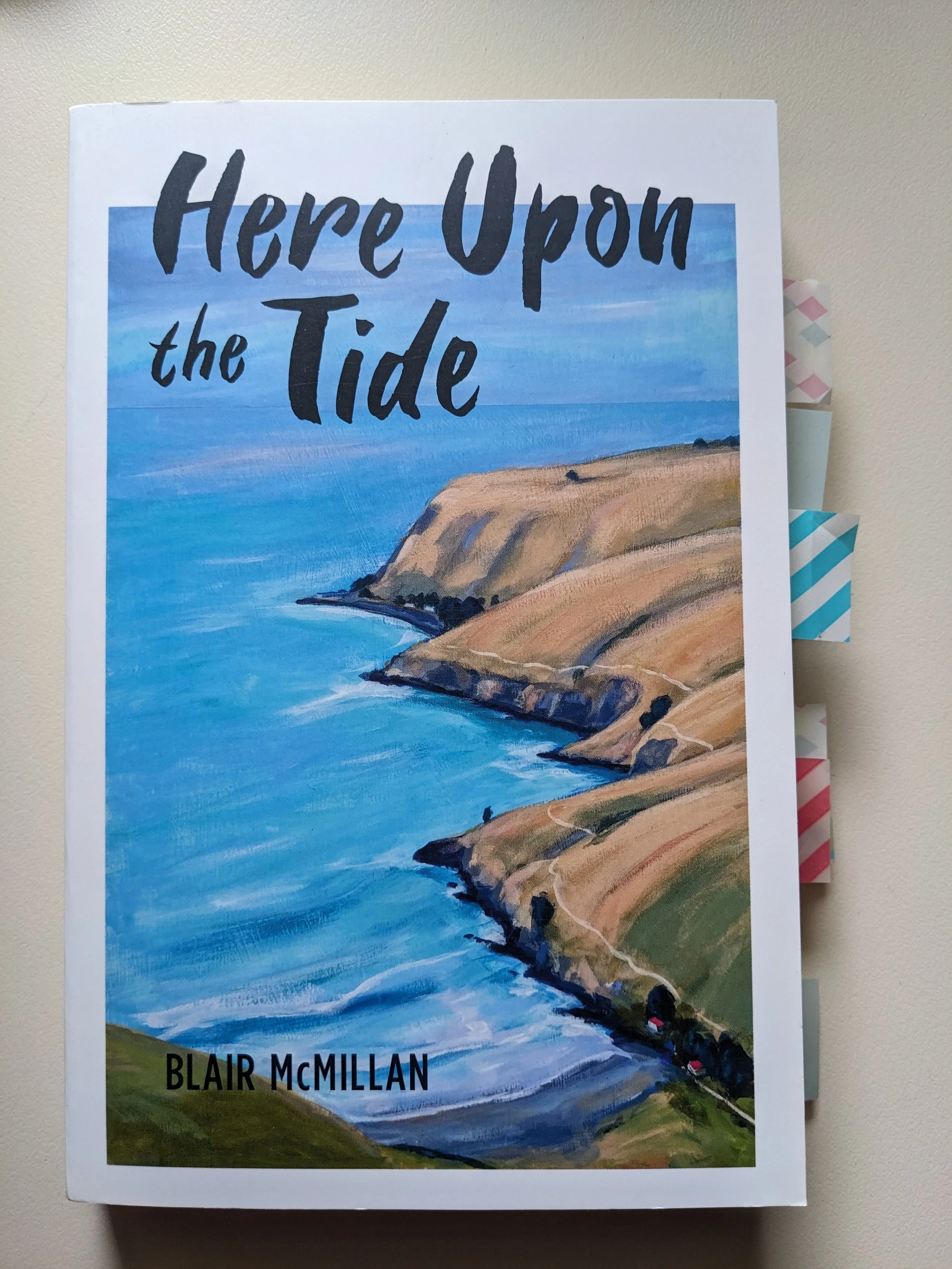
Here Upon the Tide is the debut YA novel of Ōtautahi Christchurch writer Blair McMillan. It is told in alternating chapters from the perspectives of its two protagonists: Amir, a 14-year-old in a fictitious Syrian city during the Syrian civil war; and Milly, a Pākehā girl of similar age living in post-quake Ōtautahi. In order to escape the conflict, Amir sets off on an epic journey across the globe, eventually washing up ‘here upon the tide’ where he is pulled from the moana by Milly.
I’m pleased to say that McMillan avoids some common errors in the first-timer writing for children and teens; namely, didacticism and a patronising over-simplification. Instead, his prose style embraces a heightened emotionality that would be pompous if it weren't so sincere. Here’s an example from the first chapter:
I must have surrendered to sleep eventually because I was awakened, as always, by the pre-dawn call to prayer rising majestically in volume after being announced from the minaret above the city’s ancient mosque.
Amir does not fall asleep, he surrenders to sleep. The call to prayer does not get louder, it rises majestically in volume. Even when Amir is relaying dialogue, those around him speak with a cinematic cadence. Here is his father talking to Amir and his mother about the bombing:
"More explosions jolted the ground. My ears rang, dulling all sound while the chaos continued in weird, muted silence."
For me, this stylistic choice works because it feels true to the experience of being a wordy, earnest 14-year-old with big feelings. Such a level of intensity is difficult to sustain, however. In the second half of the pukapuka, once Amir and Milly’s stories have come together, the tone changes and becomes almost Enid Blyton-esque, complete with plucky teens foiling a gang of smugglers.
This is where Here Upon the Tide started to lose me. For starters, the choice for a kaituhi Pākehā to write in the voice of a brown Muslim teen is a bold one. In his author note McMillan says he did run the manuscript by one (presumably Syrian) refugee, but does not mention any other connections with or research into his local Syrian, refugee or Muslim communities. Instead, he says he was inspired to write this pakimaero after “happen[ing] upon” Ben Taub’s New Yorker piece on the targeting of Syrian doctors (Amir’s father is a surgeon).
The work I kept expecting McMillan to reference was Abbas Nazari’s After the Tampa: From Afghanistan to New Zealand, which came out in 2021. This memoir tells the real-life story of a Muslim man who came to Aotearoa by boat as a refugee when he was a child and settled in Ōtautahi. But if McMillan is familiar with Nazari's story, he does not mention it.
McMillan’s choice of setting, date-wise, is also very telling. Here Upon the Tide is set after the earthquakes but before the mosque terror attacks, and this narrative decision haunts the entire pukapuka. Even if Amir manages to stay in Ōtautahi, his best-case scenario is that maybe he survives the shooting and is ‘only’ severely retraumatised.
But the main thing that put me off is the overall vibe of white saviourism. When Amir and Milly meet, about halfway through the book, she saves him in the most literal possible sense by preventing him from drowning. Almost the first thing she does when they touch land is demand his gratitude.
“What’s your problem? Are you for real?” she shouted. “I just saved your life, you ungrateful prat. Do you even realise the danger you put me in?”
Later on Milly ‘saves’ Amir again by running a publicity campaign on his behalf in which she tells her version of his story – without his knowledge or consent. The part that really broke my suspension of disbelief is when all the people ringing into talkback radio are in favour of helping the brown Muslim immigrant who has been found washed up in suspicious circumstances. Lol.
Here Upon the Tide is set in a Christchurch (never Ōtautahi) where whiteness is apparently indigenous (Kāi Tahu never appear) and its power structures are more or less benign. Amir, who has the makings of a model minority, obediently performs all the gratitude expected of him, speaking less and less as the story unfolds while honours and praise are heaped on Milly. The Islamophobia present throughout our country is never truly faced.
Here is Nazari, writing in his memoir After the Tampa of the aftermath of the mosque terror attacks:
[E]veryone present that night could recall at some stage being called upon to answer for every Middle Easterner following a terrorist attack, having to persuade their fearful colleagues that they were different. Now perhaps ... every white person could denounce this killer and tell us all how ashamed they were to be linked with him in any way.
This is a link that Here Upon the Tide seems reluctant to accept. It is ultimately interested in Muslims only as respectable victims and recipients of white beneficence. Once again, white racial comfort is maintained.